

WebSockets Explained: How Real-Time Communication Works Under the Hood

1. Understanding WebSocket Fundamentals
Before diving into the internals of WebSockets, it’s important to understand what makes this protocol different from traditional HTTP-based communication.
1.1 What Exactly Is WebSocket?
WebSocket is a communication protocol that enables full-duplex communication over a single, long-lived TCP connection. Unlike HTTP, where every interaction follows a request–response cycle and often requires opening new connections, WebSockets keep a connection open once established.
This persistent connection allows data to flow freely in both directions at any time, making WebSockets ideal for real-time use cases such as chat systems, live notifications, collaborative tools, dashboards, and online games.
1.2 The WebSocket Handshake
Every WebSocket connection begins with a handshake phase. This step upgrades an existing HTTP connection into a WebSocket connection.
The process works like this:
Client Request: The client sends an HTTP request containing an
Upgrade: websocketheader, signaling its intent to switch protocols.Server Response: If the server supports WebSockets, it responds with status code
101 Switching Protocolsand confirms the upgrade in its headers.
Once this exchange completes successfully, the connection transitions from HTTP to WebSocket and remains open for ongoing communication.
1.3 Core Features of WebSockets
WebSockets offer several advantages over traditional HTTP-based approaches:
Full-Duplex Communication: Both client and server can send data independently and simultaneously.
Low Latency: Eliminates repeated handshakes, reducing communication overhead.
Persistent Connections: Keeps the connection alive, enabling continuous data exchange.
2. How WebSockets Work Internally
Now that the basics are clear, let’s look at what actually happens under the hood during WebSocket communication.
2.1 Frame-Based Communication
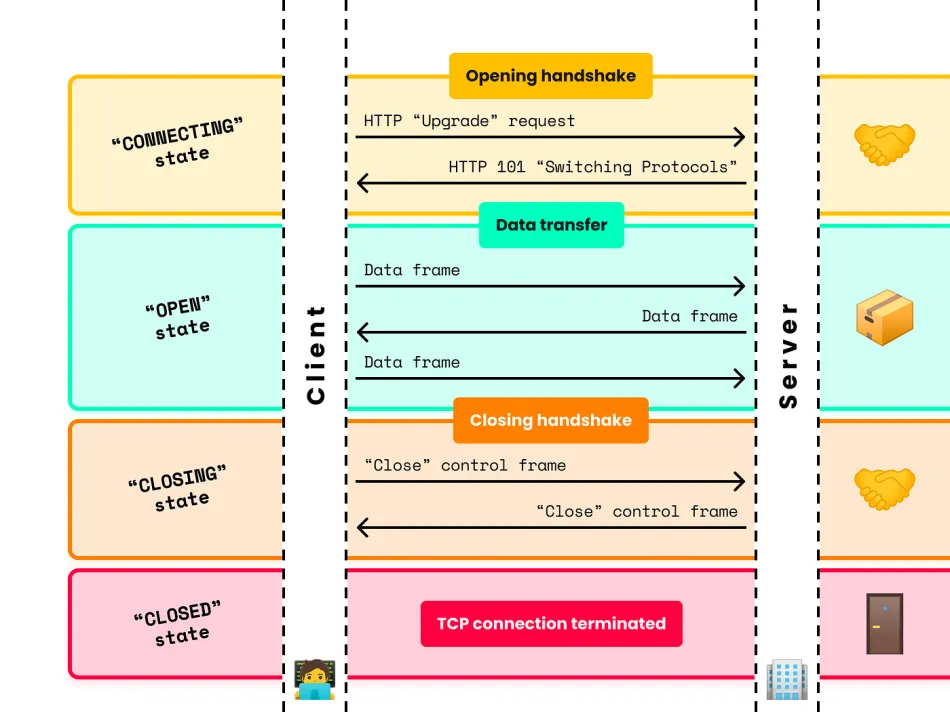
WebSocket data is transmitted using frames. Each frame contains a portion of a message and includes metadata that describes how the data should be processed.
There are three main types of frames:
Text Frames: Used for UTF-8 encoded text data.
Binary Frames: Used for raw binary data such as files or images.
Control Frames: Handle protocol-level operations like connection closure, ping, and pong.
This framing system makes WebSocket communication flexible and efficient, allowing different kinds of data to flow over the same connection.
Once the connection is established, frames can be exchanged continuously without renegotiating the protocol. This enables real-time interactions without unnecessary overhead.
2.2 Message Fragmentation and Reassembly
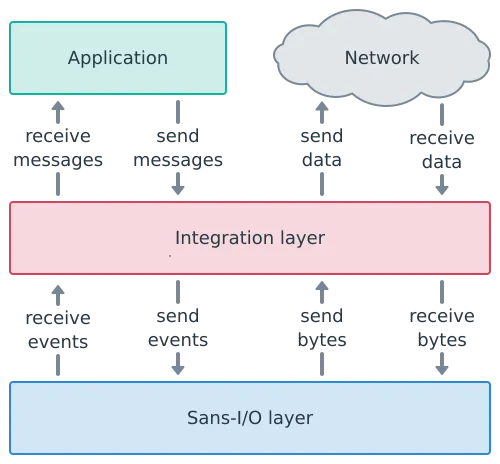
WebSockets support message fragmentation, which allows large messages to be split into smaller frames.
Here’s how fragmentation works:
A large message is divided into multiple frames.
Each frame carries metadata indicating whether it is the first, continuation, or final fragment.
Frames are transmitted independently over the connection.
On the receiving side, the WebSocket implementation collects these frames, uses the metadata to determine their order and completeness, and reconstructs the original message.
This approach ensures efficient transmission of large payloads while maintaining smooth and reliable communication, even under varying network conditions.
2.3 Ping and Pong Frames
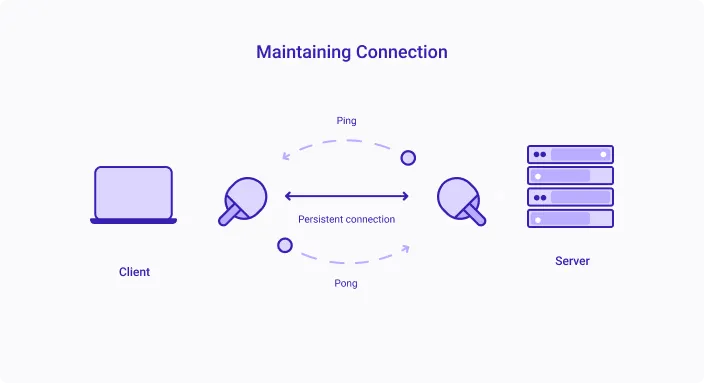
WebSockets include a built-in heartbeat mechanism to monitor connection health.
Ping Frames are sent to check whether the peer is still responsive.
Pong Frames are sent automatically in response to a Ping.
If a Ping is sent and no Pong is received within a specified time window, it usually indicates a broken or stalled connection. This mechanism allows applications to detect failures early and take corrective action, such as reconnecting.
The Ping/Pong system plays a critical role in maintaining long-lived connections, especially in real-time systems.
2.4 Security Considerations
Security is an essential part of WebSocket communication:
WSS (WebSocket Secure): Uses TLS encryption to protect data from interception or tampering.
Origin Header Validation: Servers can inspect the
Originheader to ensure that connections originate from trusted sources.
Using encrypted connections and proper origin checks helps prevent common attack vectors such as man-in-the-middle attacks and cross-site WebSocket hijacking.
3. Real-World Uses of WebSockets
WebSockets are widely adopted across many domains due to their real-time capabilities.
3.1 Real-Time Systems
Chat Applications: Enable instant message delivery and presence updates.
Online Games: Support synchronized gameplay and real-time player interactions.
Live Feeds: Power stock tickers, sports scores, and breaking news updates.
3.2 Monitoring and Notifications
Read my complete Blog at,
https://www.hexplain.space/blog/GZDy7JHoMjQX8iPiLfzG


